

Noticed a gap forming under your fence? You’re not alone, and the right fence bottom gap filler can solve it without a full rebuild.
Beyond the eyesore, an open gap can let wildlife in or give pets an easy escape route, so it’s worth fixing sooner rather than later.
The best gap filler for your fence depends on what it’s made of.
Below, we’ll cover fence bottom gap filler options for wood and vinyl materials, plus the best way to close gaps underneath fence gates.
Vinyl Fence Bottom Gap Filler
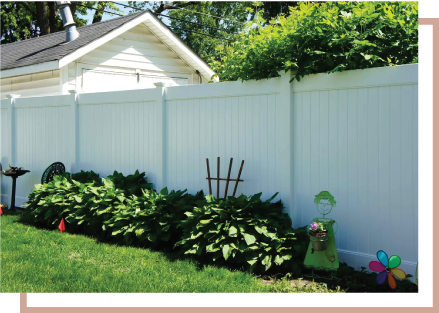
Gaps under a vinyl fence are usually caused by the land underneath sloping and creating a hollow space between the ground and the bottom of the fence. Vinyl is an inflexible material, so it can be tricky to fix these gaps.
For vinyl fences that are built on steep ground, an option is to reinstall all of the fencing entirely while taking into account the slope of the land. Because vinyl doesn’t flex or bend, it will have to be fit into brackets and cut at an angle so that the rails are still plumb with the post. If they aren’t plumb, it can cause excess stress on the railing, which could result in warping the posts.
Another option is to use a rock or small stones to fill in the gap. You can lay down stones before installing the paneling or use them to fill in gaps as they arise. This is an extremely cost-effective solution and they can be moved as needed. Similarly, a raised garden bed could be installed in front of the hole, and dirt can be used to fill the gap.
How to Fix Gap Under Fence Gate
If you find that you have a gap under your fence gate, a fence bottom gap filler can be the perfect solution. If you need your fence gate to open and close, chicken wire is an excellent choice for filler material. If your gate is just for aesthetics, then you could use wood blocks or even cement to fill the gap.
How to Fix Gap Under Wooden Fence
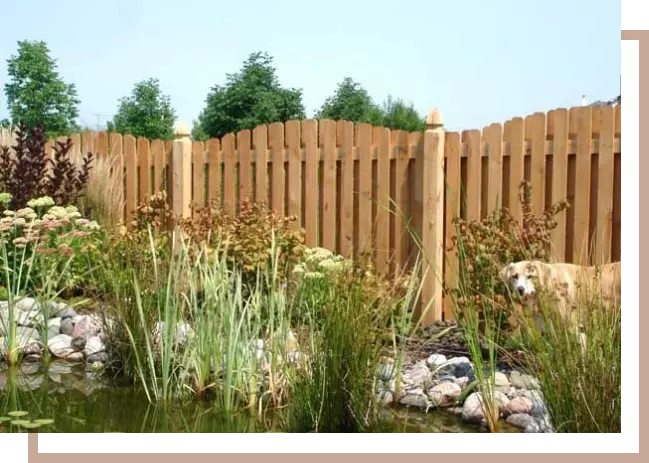
Because wood fences expand and contract with the weather, the gap sizes in your fence can vary from season to season. If they become too big, they could allow wildlife to come into your yard or allow your pets to escape, so it’s best that large gaps are fixed quickly.
Some under the fence gap blocker techniques are:
- Adding new slates: shift the boards over and add new slates to fill the gaps.
- Using vinyl woven straps: covering the gaps with vinyl woven straps is quick and cost-effective, but not as visually appealing.
- Line the fence with hedges: plant hedges symmetrically along the fence helps to cover gaps and adds more detail to your landscaping.
- Build a raised garden: a raised garden allows you to cover the gaps and add beauty to your fence.
Bottom of Fence Gap Ideas
If you have gaps underneath your fence, whether it’s wood, vinyl, or chain-link, there are many elegant and cost-effective fence bottom gap filler options to help restore security and visual appeal.
These include:
- Raised flower beds
- Symmetrical hedges
- Chain links
- Wooden Blocks
- Cement Blocks
- Excess panels
Each of these can serve as a practical fence bottom gap filler, depending on the size of the gap and the look you’re going for. Consider the materials of your fence, your budget, and your specific needs, such as keeping pets in or pests out—when choosing the right solution for your yard.
Elevate Your Yard With a Fence From Northwest Cedar Fence Company
If your gaps are too big to fix on your own or you want to upgrade your fence, our reliable team at Northwest Cedar Fence Company is here to help every step of the way. We are a fourth-generation company that is now the leader in superior Illinois fencing, so you can trust that our work and our results exceed expectations. We offer high-quality fences in cedar, aluminum, and vinyl.
Our fence contractors work across the northwest suburbs, helping residents in Naperville, Elgin, Bartlett, Schaumburg, Streamwood, Hinsdale, Tinley Park, Plainfield, Des Plaines, and Elmhurst enhance their outdoor spaces with durable, high-quality fencing.
Start the journey to elevating your yard today by calling us at (815) 367-8528 or schedule an appointment online.
Fence Bottom Gap Filler FAQs
What is the best fence bottom gap filler?
The right filler depends on your goal and fence type. Stones or rocks are the most cost-effective and adjustable option, a raised garden bed adds curb appeal while closing the gap, and a buried mesh or hardware cloth barrier is best if you’re specifically trying to stop digging.
What is the best gap filler for a vinyl fence?
Since vinyl doesn’t flex, stones or small rocks are the easiest fix as they can be laid before installation or added later, and adjusted anytime. For sloped yards, stepping or reinstalling the panels at an angle closes the gap more permanently, while a raised garden bed is a good low-cost option if the gap isn’t a pet-escape risk.
What are some cheap fence gap filler ideas?
Budget-friendly options include loose stone or gravel, vinyl woven straps, chicken wire, and mounded dirt. Most of these cost under $50 in materials and can be installed in an afternoon, though stone and buried mesh tend to hold up better long-term than dirt alone.
How do I stop my dog from digging under the fence?
Loose dirt won’t hold up against a determined digger. For pets, bury hardware cloth or wire mesh several inches into the ground along the gap, or use heavier stone that’s difficult to move. Concrete or a solid kickboard offers the most permanent fix if digging is a recurring issue.
What can I use to fill a gap under a fence gate?
Since a gate still needs to swing open, chicken wire is the most practical option as it closes the gap without blocking movement. For gates that don’t need to open, wood blocks or cement provide a more permanent, solid fix.